Most buyers walk into this decision expecting a tidy answer: capex if you can afford it, opex if you cannot. The real choice is noisier. It turns on utilization you can defend, a refresh assumption you are willing to put in writing, and an accounting treatment your finance team can live with for three to six years. Get those three right and the structure almost picks itself.
You have already decided to run AI on hardware you own. The remaining question is how you pay for it.
Four Structures, One Decision
The market offers four main routes to a GPU server you control: outright purchase, a capital (finance) lease, an operating (fair-market-value) lease, and vendor-brokered financing. They differ in who holds title, who carries residual risk, and where the payments land on your financial statements.
Outright purchase is the simplest. You own the asset, you depreciate it, and you decide when it leaves the rack. A capital lease behaves like a loan with the hardware as collateral: the asset sits on your balance sheet, you depreciate it, and you typically own it for a bargain amount at the end. An operating lease, often structured as a fair-market-value lease, keeps the asset off your books in substance, converts the spend to a monthly operating expense, and gives you a return, renew, or purchase option at the end of term. Vendor financing is a packaging layer on top: NVIDIA's own program for DGX systems, for example, offers both FMV leases and full-payment leases through third-party funders, bundling support and sometimes networking and storage into one monthly figure.
The structure you pick is downstream of three questions. How long will this generation of hardware actually earn its keep? How hard will you run it? And does your organization want the asset on the balance sheet or off it?
The Utilization Threshold That Changes The Answer
Owning hardware only beats renting it when you keep the hardware busy. The published break-even points cluster in a tight band. One widely cited analysis finds that cloud breaks even with on-premise at roughly 40% utilization, with on-premise winning above 60%. A separate 2026 model puts the floor higher, concluding that on-prem starts to beat hyperscaler pricing around 80% sustained utilization on a three-year horizon.
Translate that into a buying rule. If a workload will sit above roughly 60% utilization for three years, outright purchase or a capital lease is defensible, because the asset will earn out before the depreciation schedule runs. Below that line, you are better off either renting cycles or using an operating lease that lets you walk away at month 36. The expensive mistake is a cash purchase against a workload that peaks at 35% and never recovers.
Measure before you decide. Run the pilot on a single-node workstation or on rented capacity long enough to see a real duty cycle, then size the production system against the measured floor, not the forecast ceiling.
Refresh Cycles Set The Lease Term
How long a GPU server stays useful is now the loudest argument in enterprise accounting, and it is the argument that should set your lease term. The disclosed numbers span a wide range. Microsoft, Meta and Alphabet depreciate server and network assets over roughly five to six years. Meta extended most server lives to 5.5 years in 2025, which reduced its 2025 depreciation expense by $2.92 billion. Amazon moved the other way, cutting the useful life of a subset of servers from six years to five and booking roughly $920 million in accelerated depreciation.
The critics are harsher. Michael Burry argued publicly that the actual useful life of server equipment is closer to two to three years. A more nuanced read separates the components. One analysis suggests GPU modules carry a realistic 3.5 to 4.5 year life while chassis, networking fabric and cooling run six to eight, which is why the honest refresh plan replaces accelerators mid-life and keeps the surrounding infrastructure.
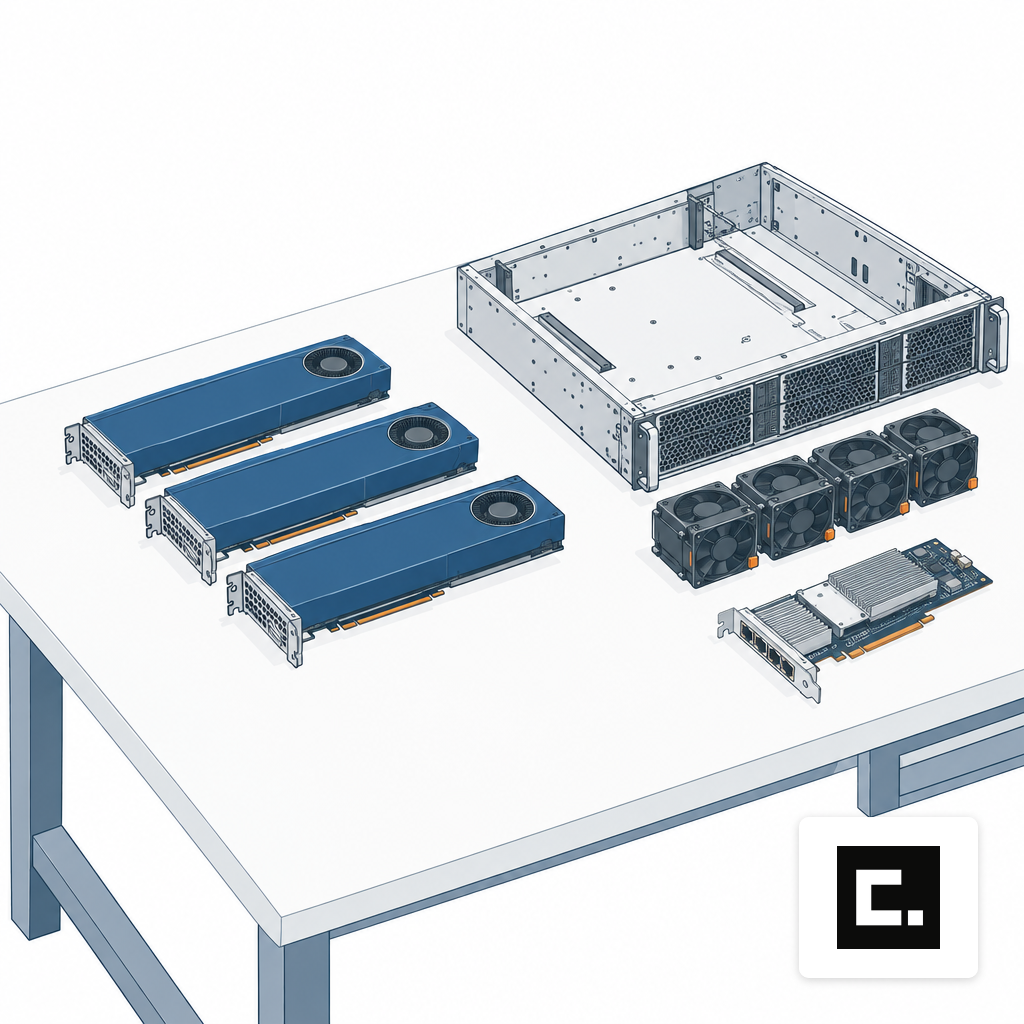
Match the finance term to the component you are actually betting on. A 36-month FMV lease is a bet that you will want new accelerators by 2029 regardless of what the chassis can still do. A 60-month capital lease is a bet that this generation will still earn useful work three years from now, through a value cascade from training to inference to batch. Both can be right. Writing the term without picking a side is how you end up paying for hardware you no longer want.
Capex Versus Opex Is Not A Preference
Finance teams will push toward whichever treatment helps the metric their board watches. Capex-friendly structures (outright purchase, capital lease) protect operating income, build an asset base, and let you spread the cost over the depreciation schedule you choose. Opex-friendly structures (FMV lease, some vendor financing) smooth monthly spend, keep the asset off the balance sheet in substance, and let you treat AI infrastructure as a program cost rather than a long-lived asset.
Two complications matter for GPU hardware specifically. The first is that depreciation life is a disclosed accounting estimate, not a physical half-life. Server useful life in the latest annual reports runs from Microsoft's two-to-six-year range through Meta's 5.5 years to a six-year life at Alphabet and CoreWeave. Pick a number inside the band your auditors can defend, document the salvage assumption on the same page, and reassess annually.
The second is that GAAP ASC 360 permits component depreciation. If you buy, you can split the GPU modules onto a shorter schedule than the chassis and networking they sit in, which captures the rapid economic consumption of accelerators without overstating depreciation on reusable infrastructure. That is the honest treatment for anyone running a mixed-generation estate, and it is harder to do inside a lease that treats the whole system as one asset.
Vendor Financing And What It Really Covers
Vendor-brokered financing has one real advantage over a generic equipment loan: it bundles the hardware, the support contract, and sometimes third-party networking and storage into one monthly figure that lines up with how AI projects are actually scoped. The NVIDIA program, for example, finances DGX systems and support services alongside third-party networking and data storage, which keeps a cluster quote from fragmenting into four separate approvals.
The trade-off is lock-in. Vendor programs steer you toward a single vendor's roadmap and a single refresh cadence. If you are standardizing on one platform anyway, that is a feature. If you want the freedom to drop a different accelerator into the next rack, buy through a vendor-neutral integrator and finance separately. For most mid-market buyers running a mix of models like Llama, Qwen and Mistral on hardware they will keep for four to six years, decoupling the finance structure from the silicon vendor keeps optionality open.
Picking The Structure
Three rules of thumb survive contact with real quotes. First, if sustained utilization will clear 60% and the workload has a credible three-year horizon, outright purchase or a capital lease is usually the lower all-in cost, because you capture residual value and avoid lease premium. Second, if utilization is uncertain or the model landscape could shift the hardware you want within 24 months, an operating lease on a 36-month term is cheaper than a cash purchase you later strand. Third, if the constraint is cash flow rather than cost of capital, vendor financing with bundled support is the cleanest way to turn a capital conversation into an operating one.
Edge and ruggedized deployments complicate this. A compact system installed in a factory or a clinic earns on availability more than on utilization, and the refresh cycle is often set by the surrounding equipment, not the GPU. For those, a longer-dated capital lease against a ruggedized edge configuration often fits better than an FMV lease designed around a 36-month data-center refresh.
What To Bring To The Quote Conversation
A useful quote conversation starts from four numbers you already have, or can produce in a two-week pilot. The measured utilization floor and ceiling of the target workload. The number of users or concurrent sessions you need to support at steady state. The data-residency or air-gap requirement that put on-premises on the table in the first place. And the depreciation life your finance team will defend to auditors.
With those in hand, the structure choice narrows quickly. A buyer with 70% sustained utilization, a five-year depreciation policy, and a defensible residual plan should be looking at purchase or a capital lease. A buyer with uncertain demand and a 36-month planning horizon should be looking at an FMV lease or vendor financing. A buyer who cannot yet state utilization honestly should run the pilot first and sign nothing. For a sized configuration against your workload, start a quote conversation with the measured numbers rather than the forecast ones.